

Earlier this week, the New York Times podcast The Daily covered what’s happening to SNAP (food stamps) in Arizona. Arizona is ahead of the curve, so to speak, in implementing the work requirements H.R. 1 imposes, and the impacts are staggering. So far, according to their reporting, about 450,000 people have lost their benefits — half the rolls. In 2023, the average monthly benefit for an individual in Arizona was $180, and the average for a household was $336. I’m not sure how to blend these, but if we go with a conservative $200/month, that’s $90M in lost benefits per month in one state. That’s over $1B a year, again, just on one safety net program in one state. When I talk about what I see as philanthropy’s mandate to fix government, this is part of what I mean. Even with the influx of funding that may come with the AI companies’ IPOs, philanthropy can never act at the scale of government. Even just trying to compensate for swings like this one (which doesn’t really begin to touch job loss from AI!) would bleed philanthropy dry very quickly. Philanthropy needs to go upstream.
But returning to Arizona, this issue of lost benefits is a more complex topic than it appears. Many people will read this as evidence that a lot of people were on SNAP who shouldn’t have been, and “shouldn’t have been” could mean that applicants weren’t technically eligible but were getting the benefit anyway, or that they were technically eligible but these observers believe that a massive government-funded program is not the way to meet these needs. I give more credit to these views than I used to. The progressive strategy of always downplaying fraud has clearly not worked; elites can dismiss the concern as a matter of principle or a signal of virtue, but people who live in low-income communities often see it around them, at the same time that they see people genuinely in need not getting benefits. (There is less actual fraud in SNAP than in other programs, whatever the error rate suggests, and a good deal of what does happen is EBT card skimming — fraud committed against recipients, by criminals.) For a take on this that will certainly offend some of you but that I found hilarious, try Jeff Maurer’s post warning his fellow liberals to remember “the dirtbags” when they talk about work requirements.
To be clear, very few of those 450,000 people in Arizona were determined to be ineligible. Overwhelmingly, they were dropped because of maddening administrative hurdles, like notices of interview appointments (a required step for eligibility) arriving after the date of the interview. “What am I supposed to do? Do I look like I can create a time machine and go back in time?” asks Alejandra Casillas, who received one of these notices, on the podcast. Alejandra’s efforts are truly epic — calling five times every morning despite being hung up on every time, physically showing up at the office and being told it can only be done by phone — but there is simply no way to fulfill the interview requirement. Alejandra has two kids and works. She is exactly the profile the new policy is supposed to protect, but she hasn’t been rejected for failing to prove she is employed. She can’t even get that far. And she can’t feed her kids on what she makes.
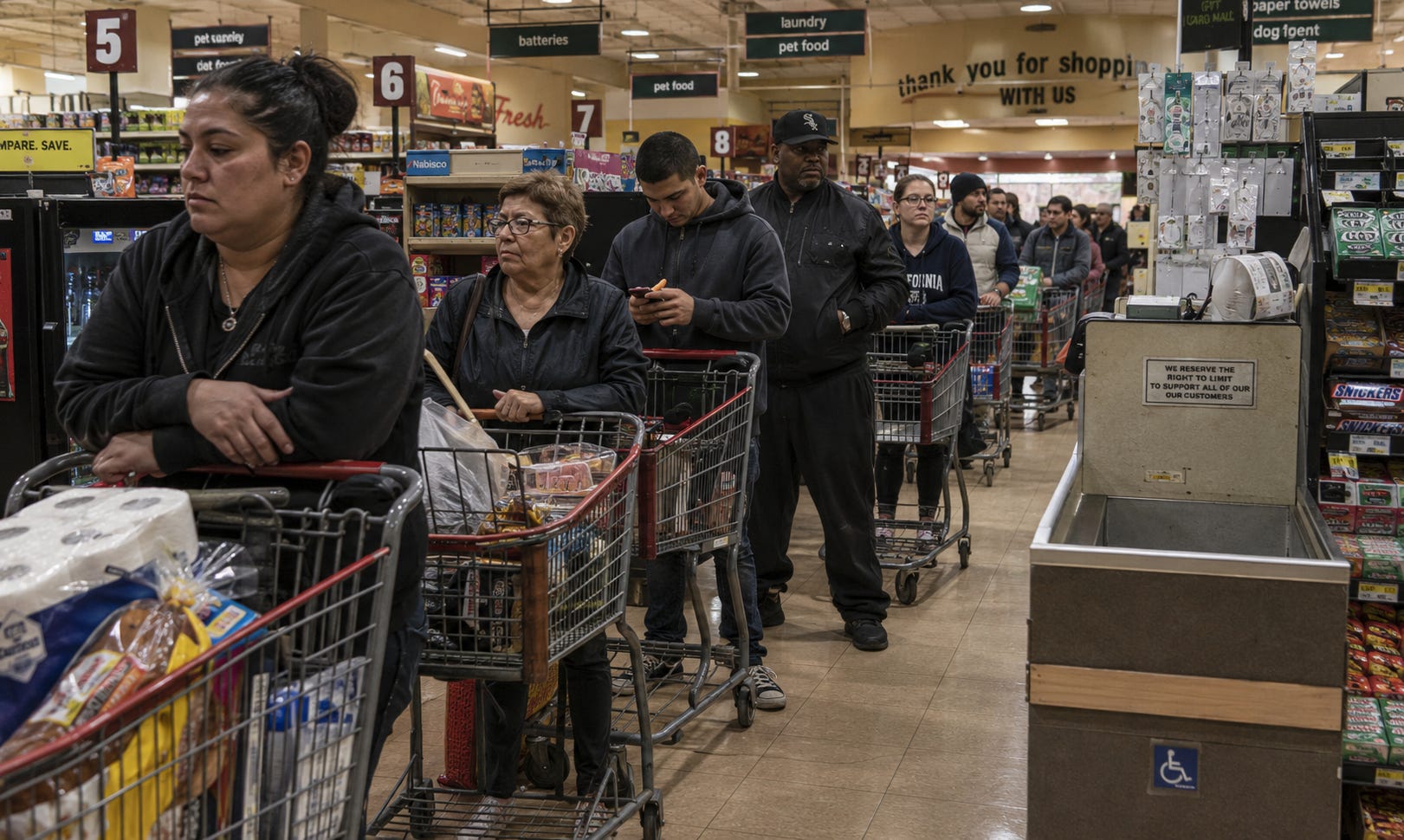
When Code for America started working on food assistance, we saw in some cases exactly what The Daily documents, including interview notices arriving after the dates printed on them. But this was in 2013, not 2026, and in San Francisco, where I guarantee you there was no directive from on high to deny or unenroll eligible clients. H.R. 1 does bring that directive, and that will cause untold harm, but despite these chilling stories (and the greater scale of disenrollment coming), I have a hard time pining for the pre-Trump status quo. I founded an organization that grew to spend $35M a year trying to fix the safety net1, and while I’m proud of the work we did (and they still do), the reality is that many Americans voted for leaders they knew were willing to gut the system, and I can’t help but think that says something about how it was working for them. It’s not as simple as too strict or too lax eligibility criteria.
At the end of the podcast, Jason DeParle, the New York Times reporter, predicts that because H.R. 1 could foist some of the costs of the program onto states (this has been until now an entirely federally-funded benefit, though states are on the hook for some portion of the administrative costs), some states could abandon SNAP altogether, something he sees as previously unthinkable. “I think it’s worth stopping to consider for a moment. I mean, can you imagine a state without a food stamp program?” I personally think giving people money for food is a great idea, and listening to the story of a grandmother raising her five grandchildren and suddenly being unable to feed them and herself (because of an incredibly minor clerical error that now can’t be fixed) will make you think that too. But the instinct to always protect the programs feeds an instinct to maintain the status quo. What if, instead of digging in during these moments of frightening disruption, we leaned in? What if the question weren’t “how do we protect SNAP?” but rather “what’s the best way to ensure that grandmother can feed her family?” Because with all due respect to those who’ve been fighting to improve it, I guarantee you that SNAP, at least the way we’ve been administering it for years, is not the best we could do.
Or more to the point, a “safety net” (make those air quotes extra heavy here) made up of dozens of bespoke programs, each with mind-bogglingly complex eligibility criteria and fragile, expensive systems poorly built to administer them, in which each program affects the other, causing endless “benefit cliff” doom loops that force constant re-engagement with said crappy systems, each gameable by those with resources and an absolute black box to those without, is not the best we can do. And it is not fit for the job we will need it to do in the coming years as AI changes what people need and expect. I read DeParle’s warning against losing SNAP through this lens. What if this crisis were a call for profound renewal? What if this moment were about building something better?
What if, instead of digging in during these moments, we leaned in?
The UK has at least built something else in its Universal Credit program, which rolled together what were previously seven different benefit programs, now administered as one. It is far from perfect. The five-week wait baked into its original design pushed people into debt. But while millions of Americans waited months, even years, for their unemployment insurance benefits during the pandemic, UC was, during that same time, as my frequent co-author Andrew Greenway says, “the dog that didn’t bark.” When Covid hit, the program had recently been rescued from years of failure to launch by a profound internal reset toward a test-and-learn implementation approach, and when claims volumes spiked, it scaled to meet demand in ways US programs did not. The UK has not nailed reinvention by any means, but at least its leaders have been asking questions we don’t even seem to entertain.
Speaking of Andrew, this topic is on my mind in part because he and I just finished writing an article for Foreign Affairs about the need not for new programs, but for new institutions. As two people who’ve dedicated the first part of our careers to the transformation of institutions, we’ve both come to believe that when transformation fails repeatedly, it’s time for something different, and one of the tools that leaders need to add to their tool belts (and probably use a lot more frequently than they do today), is starting fresh, creating new entities (agencies and departments, for example) and either endowing them with new authorities or transferring authorities from legacy institutions to the new ones. There’s plenty of precedent for this, not only in the US and the UK, but in countries around the world, and we talk about several cases in the article. The point is that while these kinds of big changes don’t come without risk, with some forethought, they can be executed responsibly. And weighed against the harms of the status quo, they can look pretty appealing.
It’s worth asking whether the institutions that administer SNAP today — which include USDA’s Food and Nutrition Service at the federal level as well as human services agencies at the state (and sometimes county) level — would be capable of crafting a better program to fight hunger. Would they be culturally or structurally capable of shedding the legacy ways of thinking and behaving that have created today’s subpar outcomes? How much of an effective reset would come from wiping the slate clean on decades of regulatory and procedural accretion, if starting over even makes that possible? Imagine instead a brand new federal agency designed to take the mandates from programs at HHS, USDA, Department of Labor, and maybe even Veterans Affairs and others, and come up with a coherent strategy for administering an actual safety net — one that works today and can meet the changes that are coming. Would our lawmakers be capable of setting different conditions for such an agency, including the HR authorities and practices that would let it hire and manage staff appropriately? Would our leaders be capable of what Iain Duncan Smith, the elected official accountable for delivery of UC, did when he told the team that their goal was not to “deliver Universal Credit” (a defined solution) but rather to “support more people, to find more work, more of the time, while protecting those who can’t” (a mandate to solve the problem, embedded in which is a mandate to adapt and pivot)? He then backed the team to use what they learned in implementing the program to change it — policy as well as delivery — so that it met that goal. Could we operate that way in the US? Would crisis-driven renewal give us that permission?
Returning to my first point about the size of the problem and philanthropy’s role here, these are the questions I’d like philanthropists and activists to take up. There is suddenly political will and leadership on these issues, which makes change now possible, but the administrative state is not going to reform itself. Our democracy (working as designed) is enormously responsive to whoever shows up — to advocate, to donate, to lobby. Try to change the status quo and everyone who profits from it shows up: vendors, unions, interest groups, and even incredibly well-meaning people who can’t imagine a state without a food stamp program, and therefore can’t imagine a state with something better than a food stamp program. When there’s no countervailing force working in the public interest, with a clear picture of what could be and a path to get there, we stay stuck.
Philanthropy could be that force. It could fund a politics of renewal. Not partisan politics, but the small-p work of building a constituency for something better where none exists today, of making it thinkable that we would design new institutions to fight food insecurity — or build infrastructure, or defend against our adversaries, or educate our kids — rather than defend the ones we have. Someone has to be in the room when authorities get written, holding an actual design and not just an objection. Someone has to pay for them to be there.
The next year will tell us whether philanthropy chooses to show up for change, or is content to plug the holes our failing systems will keep tearing open.2 We’ve just seen the size of one hole: a billion dollars a year, in one program, in one state, before the real chaos even begins. There isn’t going to be enough money in philanthropy to fill the holes, but there might be enough to change what keeps making them.
I’m referring to Code for America here, but to be clear, I stepped down from leading it in 2020 and don’t speak for it now. And of course, CfA is one of many, many organizations that work on the safety net in a wide variety of ways.
For more on how it could be that way, while avoiding the perils of plutocracy, see Rob Reich’s recent essay.
So one thing that often happens when a civic effort settles on “create new entity X” is that the part you mention wherein the right stuff/authority is transferred to that entity is half-assed, leading to a scenario wherein we now just have N+1 dysfunctional institutions. Who do you think are the kinds of people philanthropy needs to enroll in these design efforts - people who understand the operational burden of both “do” and “launch” - to ensure we don’t wind up with Yet Another Task Force, and what IYO is the structure of the philanthropic imperative such that it’s actually set up to succeed (eg realistic timelines, some actual operational load-bearing authority, or other things?)
I'm in the middle of reading The Science Of Second Chances, and I'm struck by the addition of meaningless piddly reporting requirements for parole, which don't make anybody safer, make it more difficult and more expensive for parole staff, and cause people to go back to jail a lot more, which leads to them doing more crimes anyway.
I think when we feel out of control, there's an urge to add process to make it feel more under control. Like the way you wind up in a situation where CAHSR has had literally dozens of audits performed, and the solution everyone comes up with to fix the spiraling costs is to do more audits, because they imagine that a man in a domino mask and striped shirt is running off with all the money, and they just have to find him.